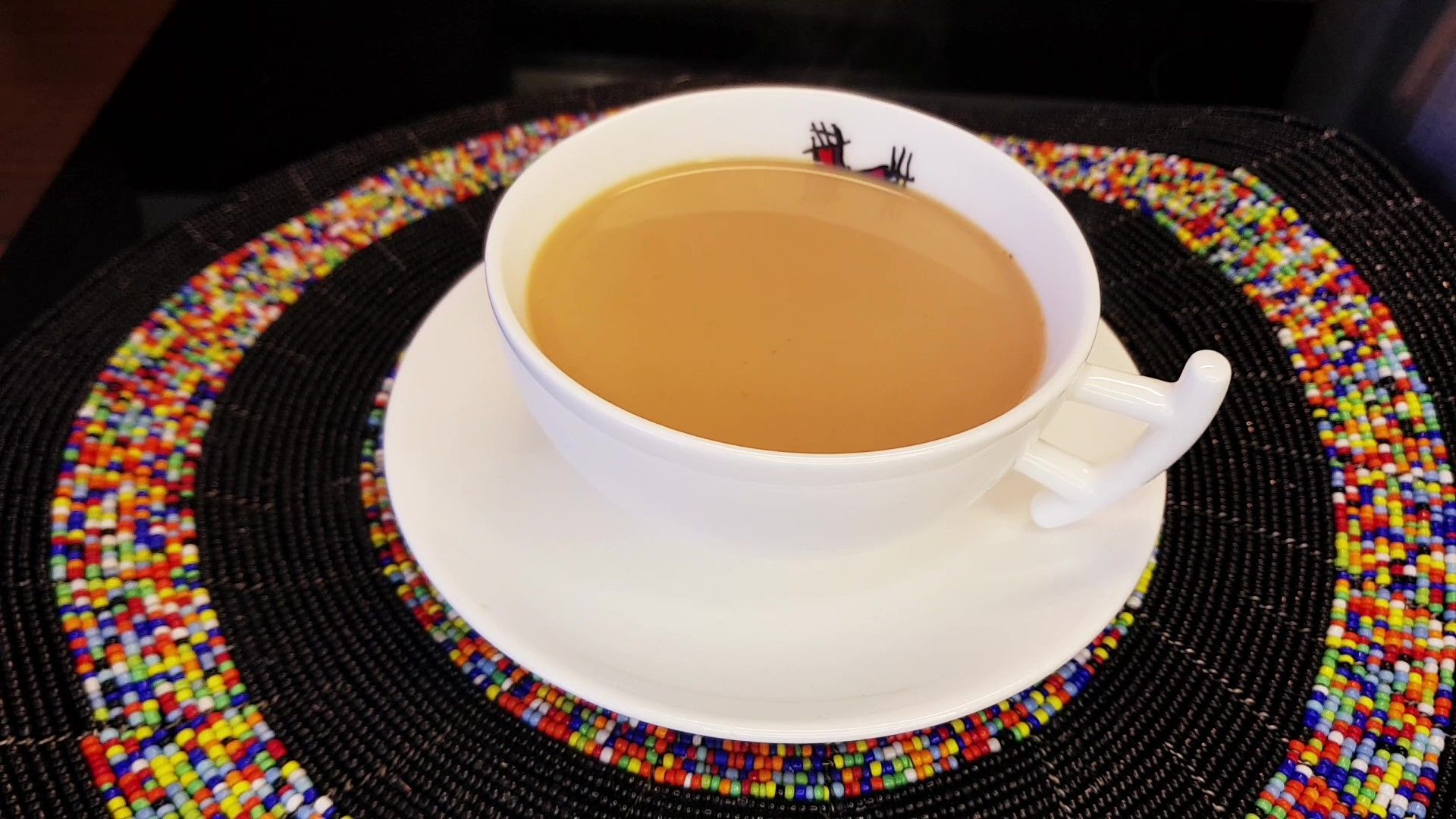
If you’re a Swahili speaker living in the Netherlands, you may have experienced this small but striking moment. You’re in a café. Someone orders a “chai tea latte.” And for a second, you pause. Because in Swahili, chai already means tea. So what exactly is “chai tea”? Tea tea? To understand why some countries say 'chai' and others say 'tea', we need to look at how this simple drink travelled around the world.
One Drink, Two Routes
Tea originated in ancient China. But when it began travelling across the world, something interesting happened. It did not move along a single path. It travelled along two major routes. And each route carried a slightly different pronunciation of the same word.
The Sea Route (the one Europeans usually know).
European traders, especially the Dutch, obtained tea mainly through maritime trade from Chinese port regions, where the pronunciation was closer to te. As a result, European languages adopted versions like:
• Tea in English
• Thee in Dutch
• Thé in French
• Tee in German.
For many Europeans, this is the familiar story: tea arrived by ship, and the word became tea.
The Land Route. (The one many people don't know).
At the same time, tea was travelling overland, including along routes such as the Silk Road. Traders there encountered the Chinese word pronounced closer to
cha. As tea moved westward through Central Asia and the Middle East, that pronunciation adapted to local languages:
•
chai in Hindi and Urdu
•
çay
in Turkish
•chai or
shay
in Arabic dialects
•
chai in Swahili, influenced by the Indian Ocean trade and South Asian contact.
In regions connected by these land and Indian Ocean networks, the word remained close to
cha. That is why large parts of Asia, the Middle East, and East Africa say
chai. So the difference is not random. When tea spread mainly through land-based networks, the word sounded like
'chai'. When it spread mainly through sea trade, the word sounded like tea. Which means when someone says “chai tea,” they are unknowingly blending two historical routes into one phrase.
Chai as Culture: More Than Just a Drink
But tea did not only travel. It changed.
In Kenya, welcoming a guest often begins with a steaming cup of chai. It is not just a beverage. It is hospitality. Chai is served when family visits, when friends gather, when business is discussed, and when the day needs a pause. Along the Swahili coast, chai developed its own character. It is spiced with cardamom, ginger, cinnamon, and cloves. It arrives with mandazi or crispy viazi karai. It invites conversation before anything else begins. So while the word travelled, each culture reshaped the drink in its own way.
When Tea Becomes Language
Over time, tea moved beyond the cup and into everyday speech. In English, it became a metaphor:
• “Storm in a teacup” — making a big issue out of something small
•“Not my cup of tea” — something that isn’t your preference
• “Spill the tea” — to share gossip or reveal a secret.
Tea began to represent preference, drama, and personality. And this is where the story becomes more interesting.
When words travel, they do not just change sound. They collect meaning. Sometimes a word stays literal. Sometimes it becomes a metaphor. And sometimes, depending on the situation, it can mean something completely different. And once a word carries multiple meanings, one thing becomes very important. Context.
When Context Changes Everything
In Kenya, the word
chai also has layers. It can mean:
• the drink itself
• tea leaves, known as
majani chai
• the tea plant, called
mchai
But in some situations,
“chai” can also be used as a polite word for a bribe. That is why context matters so much. If you miss the context, you can completely misunderstand the meaning.
An elderly woman once heard that to win her court case, she should give the judge some
“chai.” She took the advice literally and bought two kilograms of tea leaves. Why settle for one cup? At her next hearing, she proudly presented the tea. Instead of gratitude, she received a week in jail. Because in that context,
“chai” did not mean tea. It meant something very different.
One Drink, Many Stories
Swahili proverbs capture this beautifully:
“Penzi ni kama chai, likipoa halirudi moto wake.” Love is like tea. Once it cools, it does not return to its warmth.
“Maisha ni kama chai ya moto, ukinywa haraka utateketea.” Life is like hot tea. Drink it too fast, and you will burn yourself.
Tea becomes wisdom.
And perhaps that is the real story. Not that some people say
chai
and others say tea, but that one simple drink carries history, trade, hospitality, metaphor, humor, and caution all at once.
So the next time you hear “chai tea,” you can smile. Because now you know the journey behind it.